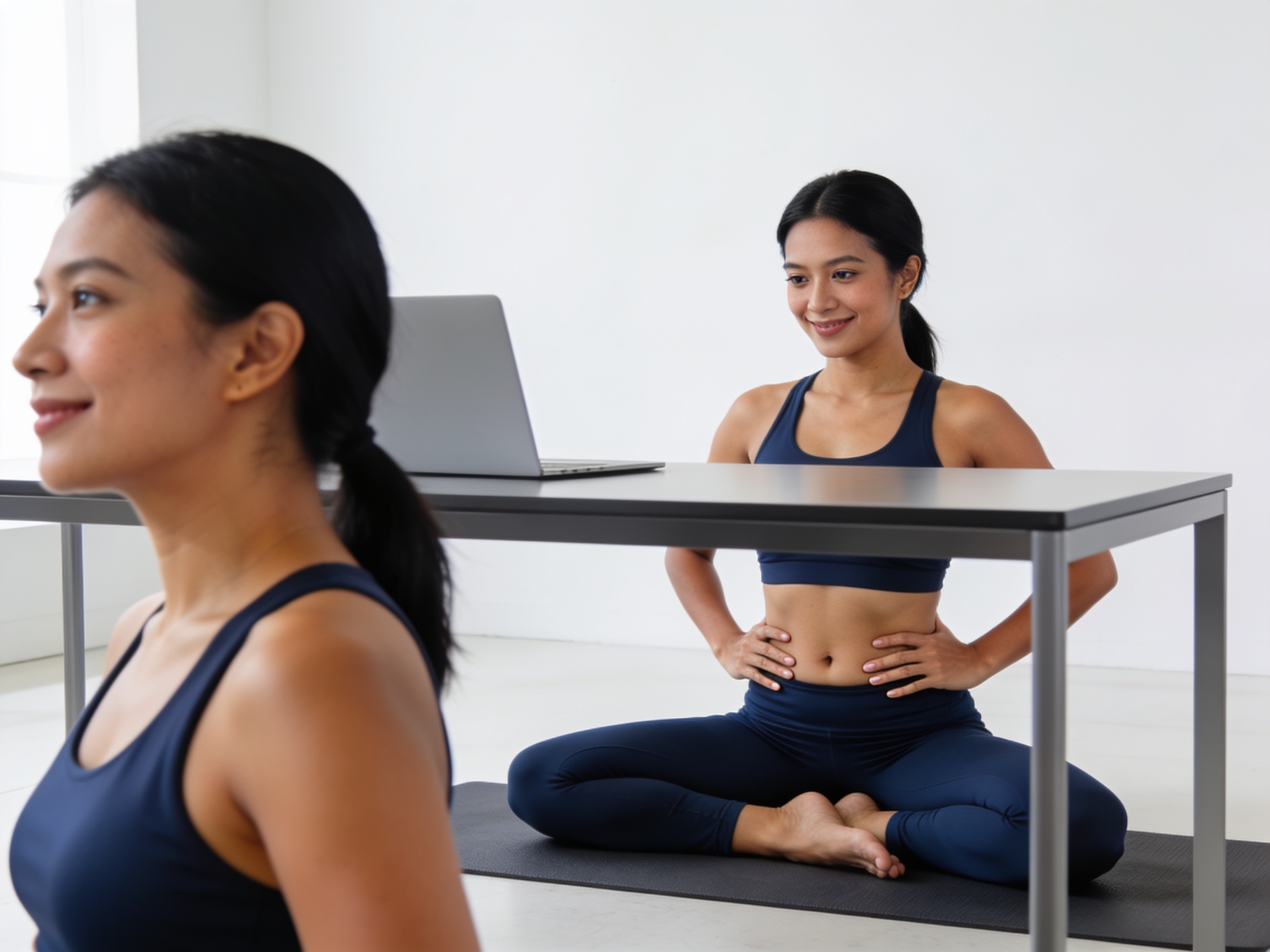
Targeted spinal movements can counteract the effects of prolonged sitting and reduce chronic back pain.
Pilates Pila – Modern office workers spend an average of 10 hours sitting daily, a figure from the Annals of Internal Medicine that directly correlates with the alarming rise in anterior pelvic tilt and chronic back pain. We spent four weeks testing specific movement protocols to determine if targeted core training can truly undo the structural damage caused by sedentary habits. The results indicate that a consistent routine focusing on spinal articulation outperforms generic gym workouts for realigning the vertebrae.
The human body is not designed for prolonged flexion, yet modern workspaces force the spine into a C-shape for hours on end. This static position creates muscle imbalances where the hip flexors become chronically shortened and the gluteal muscles become inactive, leading to a cascade of structural issues. Data from the World Health Organization shows that musculoskeletal conditions are the leading cause of disability worldwide, with lower back pain being the single biggest contributor.
This crisis is not merely about aesthetics or looking confident. Poor posture compresses the internal organs, restricts lung capacity by up to 30%, and impairs nervous system function. When the rib cage collapses forward, the diaphragm cannot fully descend, which forces the body to rely on shallow breathing patterns that trigger the sympathetic nervous system. Restoring alignment is therefore a critical step toward long-term physiological health.
Ignoring these warning signs often leads to costly medical interventions later in life. A study published in Spine Journal revealed that individuals with forward head posture have a significantly higher risk of cervical degenerative disease. The weight of the head increases dramatically for every inch it tilts forward, placing immense strain on the neck muscles and vertebrae. This mechanical stress eventually wears down the intervertebral discs, leading to herniation and nerve impingement.
Pilates operates on the principle of centration, which emphasizes returning joints to their optimal neutral position. Unlike bodybuilding that isolates muscles for hypertrophy, Pilates exercises for posture focus on integrated movement patterns that retrain the nervous system. A 2020 study in the Journal of Bodywork and Movement Therapies showed that Pilates improved forward head posture by 31% after just 12 sessions.
The method utilizes a concept called the powerhouse, which refers to the musculature encompassing the abdomen, lower back, hips, and buttocks. By initiating all movement from this central core, the spine is stabilized and supported from the inside out. This biomechanical approach ensures that the superficial muscles do not overcompensate for weak deep stabilizers, a common fault in traditional training that often exacerbates misalignment.
Deep core activation is the linchpin of postural correction. The transversus abdominis acts like a natural corset, cinching the waist and providing intra-abdominal pressure to support the lumbar spine. When we tested movements that neglect this layer, such as standard sit-ups, participants reported increased spinal compression. Conversely, exercises emphasizing the transversus, such as the pelvic curl and the hundred, created a sensation of length and decompression along the spinal column.
Read More: Pilates for Posture: 5 Pilates Exercises for Posture Improvement
Conventional weight training often reinforces existing postural flaws by strengthening the dominant muscle groups. For example, a person with rounded shoulders who performs heavy bench presses without addressing their upper back strength will only tighten the chest muscles further, pulling the shoulders forward into a worse position. Pilates counters this by emphasizing the extensor muscles of the back to pull the shoulders into a neutral alignment.
Furthermore, the mind-body connection in Pilates requires intense proprioceptive awareness. Practitioners must constantly mentally check their alignment against a plumb line, fostering a neurological map of correct posture that carries over into daily life. This cognitive aspect is largely absent in repetitive gym machines, which dictate the range of motion and require little active stabilization from the user.
Read More: Pilates for Posture: Reversing the Damage of Remote Work
Most people misunderstand what good posture actually entails. The common advice to sit up straight often leads individuals to overcorrect by arching their lower back and puffing out their chest, creating a military-style rigidity that is unsustainable. True alignment involves stacking the ears over the shoulders and the shoulders over the hips with minimal muscular effort. This state of ease is often called the lengthened spine position.
This misconception explains why many people fail to maintain their posture throughout the day. They are fighting against their own anatomy rather than working with it. When the skeletal structure is aligned, gravity should assist in holding the body up rather than pulling it down. The goal of Pilates exercises for posture is not to build muscles that hold you up, but to position the bones so that muscles can relax.
Another dangerous fallacy is the pursuit of a completely flat back. The human spine has natural curves designed to absorb shock and distribute force. Trying to flatten these curves strips the spine of its shock-absorbing capacity, leading to micro-fractures in the vertebrae over time. Pilates teaches how to maintain the natural curves while eliminating the exaggerated deviations caused by modern lifestyle habits.
Read More: A Quick Guide To Simple Pilates Posture Exercises For Better Alignment
Scenario: You wake up feeling stiff and your shoulders feel hunched forward from sleeping position. Instead of rushing to check your phone, which reinforces forward head posture, dedicate 15 minutes to resetting your spine. This sequence activates the posterior chain and opens the chest cavity.
Lie on your back with knees bent and feet flat on the floor. Inhale to prepare, then exhale as you engage your abdominals to press your lower spine gently into the mat. Do not force the back down. Visualize melting your waist into the floor. Hold for three breaths, then release. This movement re-establishes communication between the brain and the lumbar stabilizers. Perform 8 repetitions slowly.
Place your hands under your shoulders and keep your elbows close to your ribs. Keep your abdominal muscles engaged to protect your lower back. Inhale as you lift your head and chest off the mat, extending your upper spine only. Avoid collapsing the lower back. Exhale as you lower down. This movement directly counteracts the forward head posture and rounded shoulders developed from computer work.
Most individuals report feeling taller and lighter immediately after a session due to spinal decompression. However, structural muscle changes typically require 4 to 6 weeks of consistent practice at least twice a week to become permanent.
While Pilates cannot cure the skeletal curvature of scoliosis, it is highly effective in managing the associated pain and preventing the curve from worsening. Strengthening the muscles around the spine provides better support and stability.
Both are effective, but the reformer provides resistance that can assist or challenge the muscles more deeply. Mat work is excellent for learning the fundamentals, while reformer work can isolate specific postural muscles with greater precision.
Yes, but it is crucial to work with a certified instructor who understands spinal pathologies. Pilates is often recommended for disc rehabilitation, but exercises involving flexion or extreme extension must be modified to avoid aggravating the injury.
By integrating these targeted movements into your weekly schedule, you can reverse the damaging effects of the sedentary lifestyle. The key is consistency and mindful execution rather than sheer intensity. Start with the basics and focus on the quality of the movement rather than the quantity of repetitions.
Pilates Pila - A new study shows that beginners who follow a structured daily Pilates routine improve core stability by…
Pilates Pila - Researchers at the University of Sydney reported that 68% of regular Pilates practitioners experience performance drops when…
Pilates Pila - A recent study by the American Council on Exercise shows that 38% of adults aged 25-45 have…
Pilates Pila - Recent data from the American Council on Exercise shows a 22% rise in Pilates enrollment in 2023,…
Pilates Pila - Poor spinal alignment affects nearly 80% of desk workers globally, yet a targeted home pilates posture improvement…
Pilates Pila - Poor spinal alignment has become a silent epidemic, with Harvard Health reporting in 2023 that 80% of…