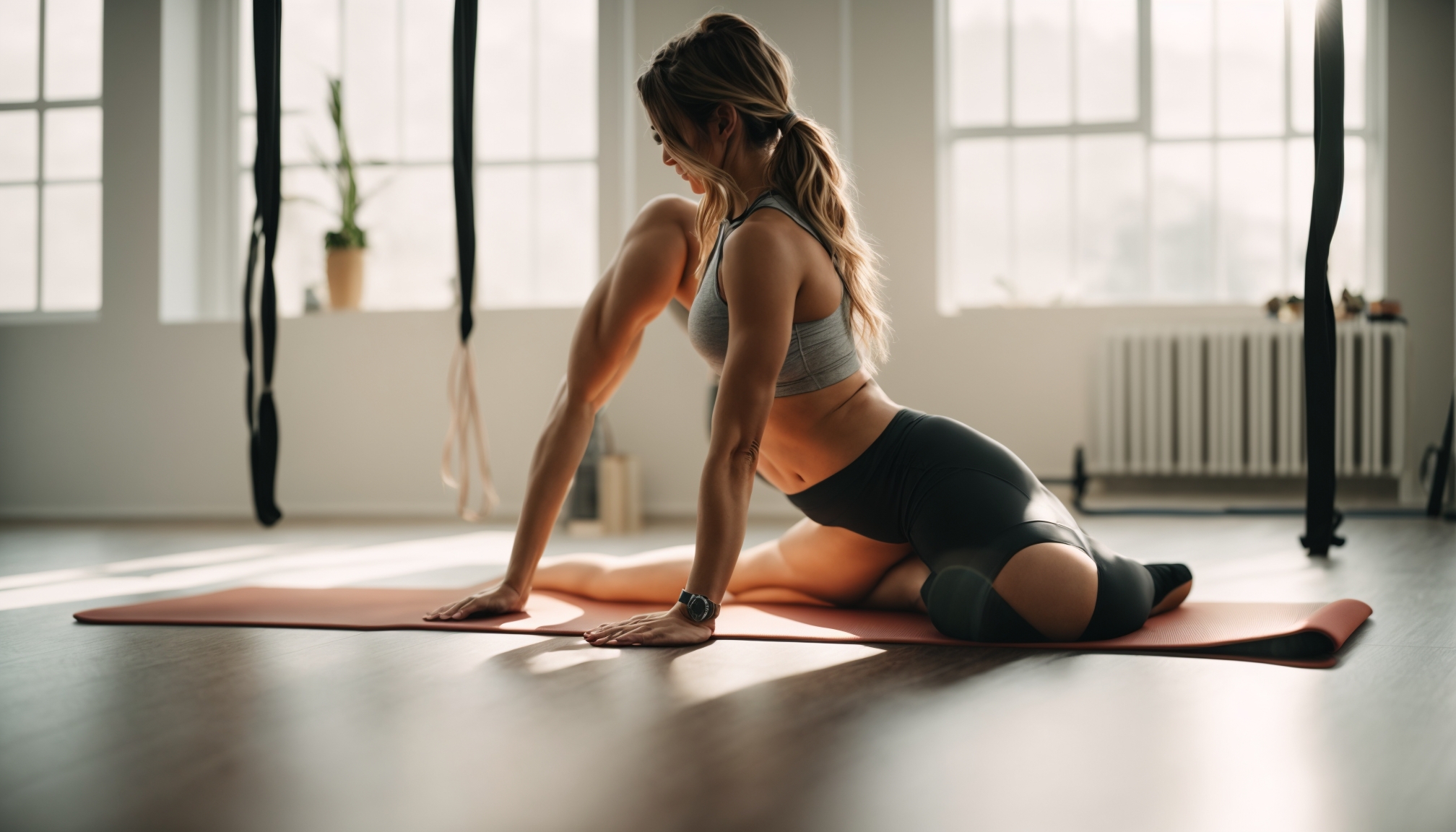
Pilates Pila – Strength, Balance, Wellness – A pilates resistance band workout offers a simple way to build stronger legs and core, improve posture, and enhance stability without heavy equipment.
A pilates resistance band workout trains multiple muscle groups at once, especially the glutes, hamstrings, quadriceps, and deep core muscles. The elastic resistance challenges the body in both the lifting and lowering phases, which boosts muscle endurance without adding joint stress.
The band also encourages better body awareness. As you stretch it, you feel instantly when your alignment shifts. This feedback helps you maintain a neutral spine, keep your hips level, and engage the right muscles instead of compensating with your lower back or neck.
In addition, resistance bands make pilates accessible. You can roll them up, carry them anywhere, and adjust tension by shortening or lengthening your grip. That flexibility supports both beginners and advanced practitioners with just one compact tool.
Before starting any pilates resistance band workout, take a few minutes to prepare your space and body. Choose a flat surface with enough room to lie down fully and stretch your arms and legs. A yoga or pilates mat provides cushioning for your spine and knees.
Select a band with light to medium resistance if you are new to the exercises. You should feel challenged by the final few repetitions, but never strained or shaky from the first one. As your strength improves, you can switch to a thicker band to increase intensity.
Begin with gentle mobility: roll your shoulders, circle your ankles, and take several deep breaths into your ribcage. This short warm-up wakes up your stabilizing muscles and prepares your joints for controlled movement. Stop immediately if you feel sharp pain or dizziness, and consult a professional if you have existing injuries.
The leg section of this pilates resistance band workout focuses on the hips, hamstrings, and thighs, while keeping your pelvis stable.
1. Side-Lying Leg Press
Lie on your side with your head supported by your arm. Loop the band around the arches of both feet, keeping your knees slightly bent. Press the top leg away from you, stretching the band, then return slowly. Maintain stacked hips and avoid rolling backward.
Perform 10–15 repetitions per side. This move targets the outer hips and glutes, which support knee tracking and overall lower-body stability.
2. Supine Hamstring Press
Lie on your back, one foot in the band, the other knee bent with the foot on the mat. Hold the band ends above your hips. Extend the banded leg toward the ceiling, then bend the knee and bring it back toward your chest with control.
Repeat for 10–12 repetitions, then switch legs. You will feel your hamstrings, glutes, and lower abs working together to stabilize your pelvis.
3. Standing Band Squat
Stand on the center of the band with feet hip-width apart, holding the ends at chest height. Sit your hips back into a squat while keeping your chest lifted. Press through your heels to stand, resisting the band’s pull on the way up.
Complete 10–15 controlled squats. The band adds extra resistance at the top of the movement, helping build strong quadriceps and glutes.
Read More: Health benefits and principles of Pilates training for all levels
The core segment of this pilates resistance band workout strengthens your abdominals, obliques, and back muscles to support everyday posture.
4. Band-Assisted Roll-Up
Sit with legs extended and loop the band around your feet, holding the ends in your hands. Sit tall, then slowly roll down, articulating the spine one vertebra at a time, using the band for light support. Roll back up, drawing your ribs toward your hips.
Perform 8–10 repetitions. Move slowly to engage the deep core and avoid pulling with your arms.
5. Seated Rotation with Band
Sit tall with your legs crossed or extended, band wrapped around your ribs or held between your hands at shoulder height. Keeping your hips steady, rotate your torso to one side, then return to center and rotate to the other.
Repeat 8–10 times per side. This exercise trains your obliques and helps improve rotational control, useful for walking, turning, and lifting.
6. Quadruped Band Kickback
Come onto all fours with the band looped around one foot and anchored under your opposite hand. Extend the banded leg straight back, keeping your hips level and your core braced. Return the knee under the hip without letting your lower back sag.
Complete 10–12 repetitions per leg. This move integrates glute strength with deep abdominal stability for better control in daily movements.
To get the most from your pilates resistance band workout, aim for two to three sessions per week. Alternate days with walking, light cardio, or mobility work to allow your muscles time to recover and adapt.
Each session can include one or two warm-up moves, three leg exercises, and three core-focused exercises. Rest 30–45 seconds between sets, and focus on smooth, controlled breathing. Inhale to prepare, then exhale through the effort phase to engage your deep core.
Track your progress by noting how many repetitions you complete with good form, how stable you feel during balance moves, and whether your posture improves during everyday tasks. As you get stronger, you can increase the band resistance, add more sets, or extend the holds at the peak of each movement.
Over time, a consistent pilates resistance band workout can enhance muscle tone, reduce discomfort in your lower back and hips, and make daily activities feel easier and more supported.